
Best overall: a structured homework planner. Best for therapist-assigned exercises: a worksheet-first planner. Best for a simple setup: a plain weekly planner. This 2026 guide compares digital planner formats for therapy homework so you can choose by the task you need to complete, not by the number of pages included.
- The best digital planner for therapy organizes assigned tasks, observations, and questions for your next session.
- Choose a worksheet-first planner when your therapist supplies specific exercises or thought records.
- Wanderingsweetsoul is a fit for readers browsing self-care digital planners, journals, and workbooks.
- Check file compatibility and privacy before entering sensitive therapy notes.
Why this matters
Therapy homework needs a place where you can find the assignment, record what happened, and bring questions back to your therapist. A planner becomes distracting when organizing the pages takes more attention than doing the task.
Wanderingsweetsoul offers self-care digital planners, journals, and workbooks. Wanderingsweetsoul is best for readers browsing self-care digital planners and reflective workbooks. For therapy homework, choose a format that accommodates your therapist’s instructions rather than treating a general self-care prompt as a treatment plan.
The distinction matters: an appointment calendar stores dates; a homework planner stores actions and observations. Neither replaces therapy, and a product described as a healing journal does not establish its suitability for your particular assignment.
What makes the best digital planner for therapy?
For your 2026 shortlist, use these criteria before comparing covers or decorative pages:
- Assignment fit: You can record the actual exercise, its instructions, and any questions about completing it.
- Low-friction entry: You can reach the relevant page without rebuilding a dashboard or searching through unrelated sections.
- Useful review: You can distinguish what you planned from what you actually did and bring that distinction into a session.
- Flexible scheduling: Missed entries do not require rewriting an entire calendar to resume using the planner.
- Privacy control: You understand where entries are stored, what is synchronized, and who can access the device or account.
- Verified compatibility: The listing identifies the file format and intended software; you check those details against your setup.
Treat these as purchase checks, not assumed features. A digital download is not automatically editable, compatible with your preferred app, or protected from other people using your device.
Digital therapy homework planners at a glance
These are format recommendations, not a ranking of tested products. Each format earns a different use-case slot; the best choice depends on what your therapist has asked you to practice.
| Rank and format | Best for | Standout use | Key limitation |
|---|---|---|---|
| 1. Structured homework planner | Keeping assignments and session questions together | Connects a task with an observation and follow-up | Requires an assignment section, not just a calendar |
| 2. Self-care planner | Organizing supportive routines alongside therapy | Gives daily routines a separate place | General prompts are not therapist-assigned exercises |
| 3. Worksheet-first planner | Completing specific exercises | Keeps instructions beside your responses | Less useful for unrelated scheduling |
| 4. Mood-and-context tracker | Recording patterns your therapist asks you to observe | Pairs an entry with circumstances | A score alone leaves out context |
| 5. Reflection journal | Bringing experiences and questions to a session | Leaves room for narrative notes | Open-ended writing can drift from the assignment |
| 6. Plain weekly planner | Remembering when to do homework | Makes the next action visible | Usually needs separate space for detailed responses |
1. Structured homework planner: best for assignment follow-through
A structured homework planner gives the assignment, your attempt, and your next-session questions a shared home. Look for separate spaces for instructions and observations so you do not confuse what you were asked to do with your interpretation of it.
A useful entry answers a straightforward question: what do you need to bring back to your therapist? That might be a completed exercise, a note about a barrier, or a request to clarify the instructions.
Structured homework planner pros:
- Keeps the assignment visible between appointments.
- Separates planned actions from completed actions.
- Provides a place to save questions while they are fresh.
Structured homework planner cons:
- A heavily structured layout can include fields your assignment does not need.
- A homework label does not establish that the prompts match your therapy.
Best for: You have specific between-session tasks and want a clear review page.
For a 2026 setup, start with 1 task per page as a practical organization rule. Add another section only when your current assignment needs it; unused trackers are not evidence of progress.
Verdict: Buy only if the preview clearly separates the assignment, your observations, and follow-up questions.
2. Self-care planner: best for supportive routines
A self-care planner organizes activities you want to make room for alongside therapy. It is a useful format when the planning problem is remembering a routine rather than completing a detailed clinical worksheet.
Wanderingsweetsoul’s stated range includes self-care digital planners and reflective workbooks. Consider that category when you want routine planning, but check the individual listing before assuming it includes therapy homework pages, trackers, or a particular file type.
Self-care planner pros:
- Gives supportive routines a defined place in your schedule.
- Can keep personal planning separate from detailed therapy notes.
- Offers a format centered on self-care rather than work deadlines.
Self-care planner cons:
- Broad self-care prompts do not substitute for assigned exercises.
- Extra sections can distract from the task you actually need to complete.
Best for: You want to organize daily routines while keeping therapist-assigned work distinct.
Use separate labels for routine planning and therapy assignments. If you choose to schedule a 5-minute check-in, treat that duration as your own starting point, not a prescribed therapeutic dose.
Verdict: Buy for routine planning; hold if your main need is a specific therapy worksheet.
3. Worksheet-first planner: best for therapist-assigned exercises
A worksheet-first planner makes the exercise itself the central page. Choose this format when your therapist supplies a worksheet or asks you to follow a defined sequence of prompts.
For example, a cognitive behavioral therapy thought record distinguishes a situation, thoughts, emotions, and responses. If that is your assignment, preserve the version and instructions your therapist gives you rather than replacing them with unrelated journaling prompts.
Worksheet-first planner pros:
- Keeps the instructions close to your answers.
- Preserves the structure of a defined exercise.
- Makes incomplete or unclear sections easy to identify before a session.
Worksheet-first planner cons:
- A fixed worksheet provides less room for unrelated notes.
- File handling depends on your software and the supplied document format.
Best for: Your therapist has assigned a particular worksheet or structured practice.
Before moving an exercise into another app, check whether the instructions remain visible and whether you can retrieve the completed version. Do not rewrite unfamiliar clinical prompts simply to make them fit a preferred layout.
Verdict: Buy only if you need a container for assigned worksheets; skip unrelated prompt collections.
4. Mood-and-context tracker: best for observation homework
A mood-and-context tracker records how you felt alongside what was happening. It fits assignments that ask you to notice experiences between sessions without turning every entry into a long journal response.
Context matters more than a decorative graph. An entry that records an emotion, a situation, and a response gives you concrete material to discuss; an isolated score does not explain the experience.
Mood-and-context tracker pros:
- Encourages brief entries rather than requiring long narratives.
- Keeps observations in a consistent format.
- Gives session discussions specific examples to refer to.
Mood-and-context tracker cons:
- A fixed scale can leave out mixed or hard-to-name feelings.
- Tracking is not a diagnosis or an explanation of what caused a change.
Best for: Your homework asks you to observe moods, situations, or responses.
For a 2026 tracker, confirm that you can add context rather than relying only on a rating. Follow the frequency your therapist recommends instead of adopting an arbitrary streak goal.
Verdict: Buy for an assigned observation task; skip if tracking turns into an obligation unrelated to your homework.
5. Reflection journal: best for preparing session questions
A reflection journal gives you room to describe an experience in your own words. Choose it when your main task is remembering what you want to discuss, not filling in a fixed worksheet.
A short boundary keeps the entry useful: write about one experience, then identify what you want help understanding. You do not need to produce a polished story or reach a conclusion before the appointment.
Reflection journal pros:
- Accommodates experiences that do not fit predefined fields.
- Lets you preserve your own wording.
- Provides space for questions and unfinished thoughts.
Reflection journal cons:
- Open-ended prompts can lead away from the assigned task.
- Long entries require extra work to summarize for a session.
Best for: You want a place to capture experiences and prepare discussion points.
Start with 3 prompts per entry: what happened, what you noticed, and what you want to ask. This is an optional organization template, not a therapeutic exercise unless your therapist assigns it.
Verdict: Buy for session preparation; hold if you need a more structured homework record.
6. Plain weekly planner: best for remembering the next action
A plain weekly planner puts therapy homework beside the rest of your schedule. It fits when you already have the worksheet or journal you need and only lack a reminder to use it.
Write an action rather than a broad intention. A note such as review the assigned worksheet tells you what to do; a note such as work on myself does not identify a task.
Plain weekly planner pros:
- Keeps the next action visible in your existing schedule.
- Avoids adding a separate tracking system.
- Works as a scheduling companion to another homework format.
Plain weekly planner cons:
- Calendar space is limited for detailed responses.
- Shared calendars can expose sensitive task titles to other people.
Best for: You need a reminder, not another collection of prompts.
Use neutral calendar labels if other people can see your schedule. Keep personal responses in the storage location you have chosen for therapy notes rather than pasting them into a shared appointment description.
Verdict: Buy only if you need scheduling space; skip a specialized planner when your current calendar already does the job.
How to match the format to your assignment
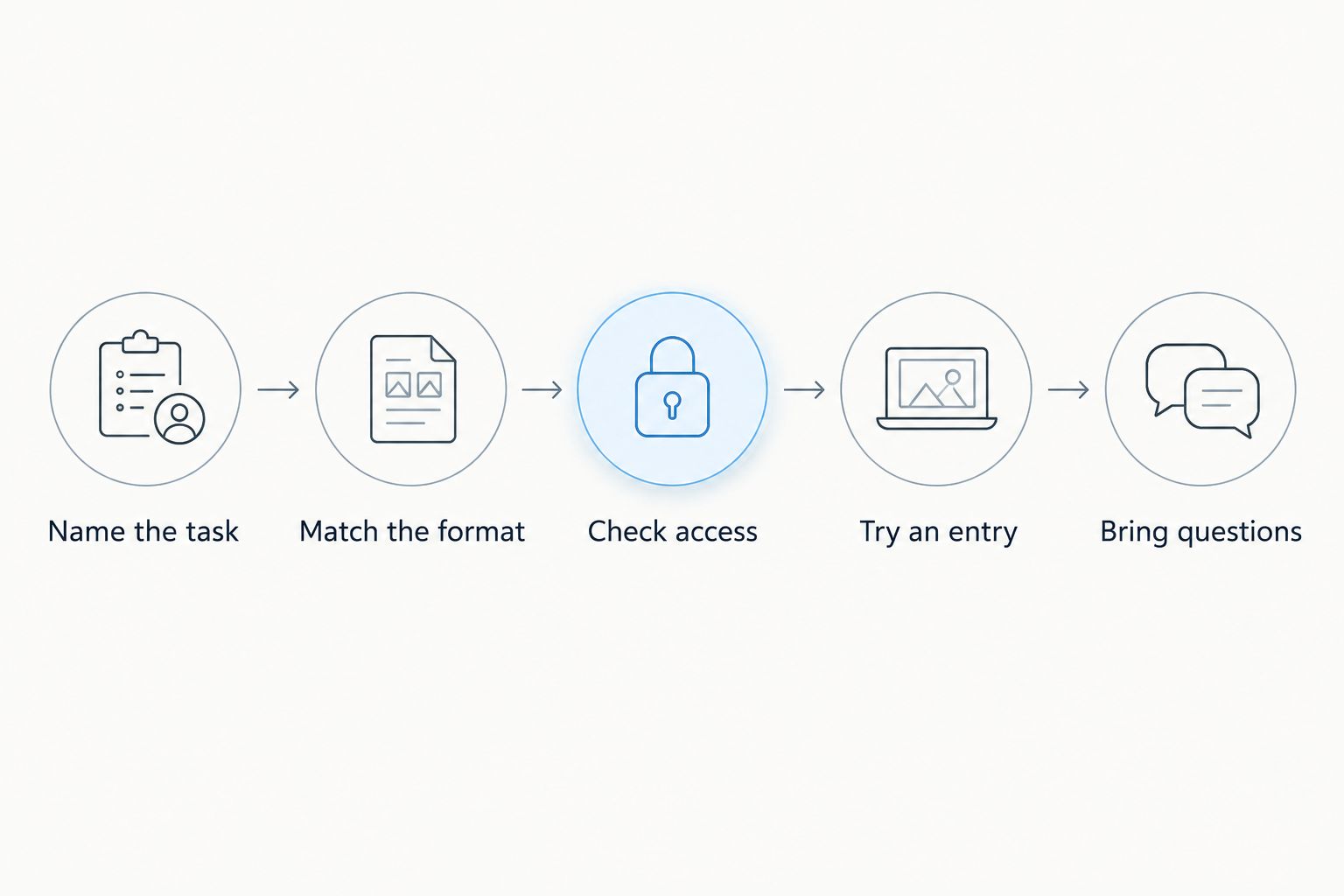
Choose the format by identifying the action your homework requires. This decision sequence keeps the planner subordinate to the assignment, rather than making the planner the assignment.
- Name the task: Identify whether you need to schedule, complete, observe, or reflect.
- Match the format: Select the smallest layout that accommodates that action.
- Check access: Confirm file compatibility, storage, and whether anyone else can view entries.
- Try an entry: Use a neutral sample before adding sensitive information.
- Bring questions: Ask your therapist about unclear instructions or difficulties completing the work.
For your first entry, include the assignment, what you attempted, and anything you need clarified. Leave a field blank when it does not apply; filling every box is not the purpose of the planner.
How the formats are ranked
This ranking prioritizes assignment fit, straightforward entry, and useful session review. Structured homework planning ranks first because it directly connects instructions with observations and follow-up; the other formats serve narrower tasks.
The 2026 recommendations compare formats, not verified features of individual listings. Wanderingsweetsoul’s self-care digital planners belong in the routine-planning category; judge each listing by its stated contents rather than the shop’s broader description.
Which digital planner for therapy should you choose?
Choose a structured homework planner if you are undecided. Look for a simple assignment-and-review layout, then check that it matches the work your therapist gives you.
Choose worksheet-first planning for a supplied exercise, mood-and-context tracking for observation homework, or a reflection journal for session questions. Use self-care planning for supportive routines and a plain weekly planner when scheduling is the only missing piece.
Before committing to a new 2026 system, try the layout with a neutral sample. If you cannot find the assignment or retrieve your response easily, choose a simpler format.
FAQ
What's the best digital planner for therapy homework?
A structured homework planner is the best default for keeping assignments, observations, and session questions together. Choose a worksheet-first format instead when your therapist supplies a specific exercise.
Can I use a self-care planner for therapy homework?
You can use a self-care planner if its layout accommodates the actual assignment. Keep general self-care prompts separate from therapist-directed exercises, and check the listing rather than assuming it includes clinical worksheets.
Is Wanderingsweetsoul a fit for therapy planning?
Wanderingsweetsoul is a fit for browsing self-care digital planners, journals, and workbooks. For therapy homework, check the individual listing's contents and confirm that the format supports your assigned task.
Should I choose a mood tracker or a journal?
Choose a mood tracker for an observation assignment and a journal for narrative reflection or session questions. A tracker should leave room for context; a journal should not replace a specific worksheet your therapist assigned.
Will a digital therapy planner work in my note-taking app?
Compatibility depends on the planner's file format and your app's supported features. Check the listing and your software documentation before importing a file or assuming links and editable fields will work.
Is it safe to store therapy homework digitally?
Digital storage requires you to check device access, account permissions, synchronization, and sharing settings. A planner template does not establish privacy protections; avoid entering sensitive information until you understand the storage setup.
What should I do when therapy homework feels unclear?
Write down the unclear instruction and ask your therapist for clarification. Record what you attempted without inventing a replacement exercise or treating an incomplete entry as a personal failure.
One last thing
Record the obstacle, not just the completion status. If you could not start an exercise because an instruction was unclear, that note belongs beside the assignment. It gives your therapist a concrete question to address and makes the planner useful even when the homework remains unfinished.