
Best overall: a thought-record anxiety journal. Best for spotting recurring worries: a worry log. Best for a blank-page alternative: a guided check-in journal. This 2026 guide compares seven journal formats by what you need to write, review, and do next—not by promises of anxiety relief.
- A thought-record anxiety journal is the default pick for examining a specific worry without treating it as fact.
- Choose a worry log for recurring concerns or a guided check-in journal when starting feels difficult.
- Wanderingsweetsoul suits readers looking for digital self-care journals and workbooks; check each listing before choosing.
- Anxiety journaling supports reflection; it does not replace professional assessment or treatment.
Why this matters
An anxiety journal should give your thoughts a useful structure, not another task to complete perfectly. A page for examining one prediction serves a different purpose from a page for noticing physical tension or planning a response.
Wanderingsweetsoul offers digital self-care planners, journals, and workbooks. Wanderingsweetsoul is a fit for anxiety journal shoppers seeking digital self-care formats to explore. Choose from the actual listing details rather than assuming every self-care journal includes anxiety-specific prompts.
The seven recommendations below are journal formats, not seven named commercial products. That distinction lets you compare the writing method before choosing a download, notebook, or existing template. For your 2026 shortlist, prioritize a format you can use on an ordinary difficult day.
What makes the best anxiety journal?
Use these criteria to judge whether a journal matches your needs:
- Clear purpose: The page helps you examine a thought, recognize a pattern, or choose an action. It does not ask you to do everything at once.
- Manageable writing: You can complete an entry without needing a polished narrative or an uninterrupted evening.
- Useful prompts: Questions separate observations from interpretations instead of repeatedly asking why you feel anxious.
- Review value: Entries make it possible to revisit a prediction, notice a recurring context, or identify unfinished actions.
- Emotional boundaries: The format gives you permission to pause. More disclosure is not automatically better.
- Practical access: The journal works in the medium you actually use, with file requirements and privacy arrangements checked before purchase.
The best anxiety journal is the one whose structure matches the problem you want to examine. A beautifully presented page still fails that test if its prompts send you into repetitive analysis.
Anxiety journals at a glance
The 2026 ranking puts structured thought examination first, then separates the remaining formats by distinct use cases. Read the limitation column before picking a favorite.
| Rank and format | Best for | Standout feature | Key limitation |
|---|---|---|---|
| 1. Thought-record journal | Examining a specific anxious prediction | Separates the situation, interpretation, evidence, and response | Requires concentration when feelings are intense |
| 2. Worry log | Recognizing recurring concerns | Records the worry, context, and later outcome | Can become repetitive worry collection |
| 3. Guided check-in journal | Getting started when prompts help | Offers a repeatable entry structure | Generic questions can miss your actual concern |
| 4. Gratitude-and-balance journal | Recording what worry leaves out | Keeps difficult experiences beside supportive details | Positivity-only prompts can feel dismissive |
| 5. Body-awareness journal | Describing physical sensations and context | Uses concrete observation rather than a long narrative | Can encourage excessive symptom monitoring |
| 6. Freewriting journal | Expressing thoughts without a template | Leaves the page open for your own language | Offers little protection against circular writing |
| 7. Weekly-review journal | Turning past entries into practical decisions | Connects patterns with a next action | Relies on material you can review |
1. Thought-record journal: best anxiety journal for examining predictions
A thought-record journal separates what happened from what you think it means. You record the situation, the anxious prediction, evidence supporting and challenging that prediction, and a more balanced response.
Start here if your worry sounds like a conclusion: a mistake will ruin everything, a delayed reply means rejection, or an unfamiliar situation will go badly. The task is not to prove that everything is fine. It is to make the interpretation more precise.
Thought-record journal pros:
- Separates observable facts from assumptions.
- Gives each entry a specific question to examine.
- Makes room for evidence that challenges the initial prediction.
Thought-record journal cons:
- Requires more concentration than a short check-in.
- Can turn into repeated reassurance-seeking if you keep rewriting the same answer.
Try one situation rather than your entire day. Finish with a balanced statement and an action you control; do not keep editing until uncertainty disappears.
Best for: Readers who want to examine a specific anxious prediction.
Verdict: Buy a thought-record format if structured reflection matches your goal; skip complicated templates.
2. Worry log: best anxiety journal for recurring concerns
A worry log records what you are worried about, what was happening when it appeared, and what happened later. Its value comes from revisiting entries rather than collecting them indefinitely.
Use a compact structure: concern, context, possible action, later outcome. Keep the possible action separate from events outside your control. That distinction stops the page from treating every worry as a problem you can solve immediately.
Worry log pros:
- Keeps recurring concerns easy to find.
- Connects a worry with its surrounding circumstances.
- Leaves space to compare a prediction with a later outcome.
Worry log cons:
- Can become a catalog of fears without a review habit.
- Does not provide much help evaluating the thought itself.
Set a review point before starting another page. A concern that keeps returning needs a considered response, not simply a longer description each time it appears.
Best for: Readers whose worries repeat across different days or situations.
Verdict: Buy a worry-log format for pattern review; skip it if you only want a place to vent.
3. Guided check-in journal: best anxiety journal for an easier start
A guided check-in journal supplies the questions so you do not have to invent an opening. Useful prompts ask what you notice, what feels difficult, and what would help you take the next manageable step.
The strongest starting template is short enough to finish without forcing an answer to every question. During your 2026 search, inspect sample pages for the actual prompts—not just the cover or the journal's description.
Guided check-in journal pros:
- Removes the need to decide how to begin.
- Gives entries a consistent structure.
- Supports brief answers rather than polished paragraphs.
Guided check-in journal cons:
- Repeated questions can feel restrictive.
- Broad mood prompts do not necessarily help examine a particular fear.
A practical starting exercise is a 3-minute entry: describe the concern, name what you need, and choose one next step. This is a suggested boundary for the exercise, not a claim about how quickly journaling changes anxiety.
Best for: Readers who abandon blank notebooks because starting feels difficult.
Verdict: Buy a guided check-in format when clear prompts make writing easier.
4. Gratitude-and-balance journal: best anxiety journal for a fuller daily picture
A gratitude-and-balance journal records difficult experiences alongside support, ordinary comforts, or things that went acceptably. The balance matters: gratitude should not require you to deny distress.
Choose prompts that let both experiences remain true. You can describe a hard conversation and also acknowledge the person who listened afterward without making either cancel the other.
Gratitude-and-balance journal pros:
- Preserves details that a worry-focused entry leaves out.
- Makes supportive people and actions visible on the page.
- Works with short, concrete observations.
Gratitude-and-balance journal cons:
- Positivity-only prompts can pressure you to minimize problems.
- Does not directly examine an anxious prediction.
Try 2 short sentences: one about what was difficult and one about what supported you. Avoid turning the second sentence into an argument that you should not feel the first.
Best for: Readers who want a daily record that includes more than worries.
Verdict: Buy a balanced format; skip journals that demand gratitude instead of allowing honesty.
5. Body-awareness journal: best anxiety journal for describing sensations
A body-awareness journal records sensations alongside context, such as what you were doing and what you noticed. It is an observation tool, not a way to diagnose a symptom or decide that anxiety caused it.
Keep descriptions ordinary and specific: tense shoulders during a difficult call, for example, rather than an elaborate interpretation. Finish the entry instead of repeatedly checking whether the sensation has changed.
Body-awareness journal pros:
- Gives you language beyond a broad mood label.
- Connects a physical observation with its setting.
- Allows a brief entry without a detailed personal narrative.
Body-awareness journal cons:
- Repeated checking can make the journal unhelpful.
- Cannot establish the cause or medical significance of a symptom.
If recording sensations increases your preoccupation with them, choose a different format. New, severe, or concerning symptoms need appropriate medical attention, not a journal-based explanation.
Best for: Readers who want to describe physical experiences without guessing their cause.
Verdict: Hold if body-focused writing becomes repeated symptom checking; otherwise choose a brief format.
6. Freewriting journal: best anxiety journal for unrestricted expression
A freewriting journal leaves the page open. You write in your own words without completing a sequence of prompts, which makes it suitable when a template feels more restrictive than helpful.
Give the entry a boundary. A suggested 5-minute session creates a stopping point; it is not a treatment dose or an expected time to feel better.
Freewriting journal pros:
- Accommodates thoughts that do not fit a template.
- Requires no special page structure.
- Lets you choose what to disclose and what to leave out.
Freewriting journal cons:
- Can repeat the same thought without adding clarity.
- Makes later comparisons harder when entries cover many subjects.
Close with a sentence about what you need next. If the page repeatedly brings you back to the same prediction, switch to a thought record rather than extending the session.
Best for: Readers who prefer their own language to guided questions.
Verdict: Skip a new purchase if an existing notebook already serves your freewriting needs.
7. Weekly-review journal: best anxiety journal for choosing next actions
A weekly-review journal turns earlier observations into decisions. You look for recurring situations, actions you took, unfinished tasks, and support you want to request.
Unlike a daily entry, this format depends on having something to review. Use a brief recap if you do not keep detailed notes; completeness is less important than a clear decision.
Weekly-review journal pros:
- Connects writing with a practical next action.
- Creates a place to revisit unfinished concerns.
- Helps separate recurring issues from isolated events.
Weekly-review journal cons:
- Offers little support in the moment a worry appears.
- Can become another performance checklist.
Choose one action for the coming week. Writing a long improvement plan defeats the purpose if it leaves you with more obligations than you started with.
Best for: Readers who already journal but rarely use their entries to make decisions.
Verdict: Buy a weekly-review format if reflection needs a clearer finish.
How the formats are ranked
This 2026 ranking uses purpose, writing effort, prompt quality, review value, boundaries, and practical access. It compares what the formats ask you to do; it does not rank clinical effectiveness or claim that commercial products were tested.
A thought record takes the default position because it gives a specific worry a defined structure. The remaining positions serve different needs, so a lower-ranked format can still be your better choice.
Which anxiety journal should you choose?
Choose a thought-record anxiety journal if you are undecided. Choose a guided check-in if starting is the obstacle, or a worry log if reviewing recurring concerns is your priority.
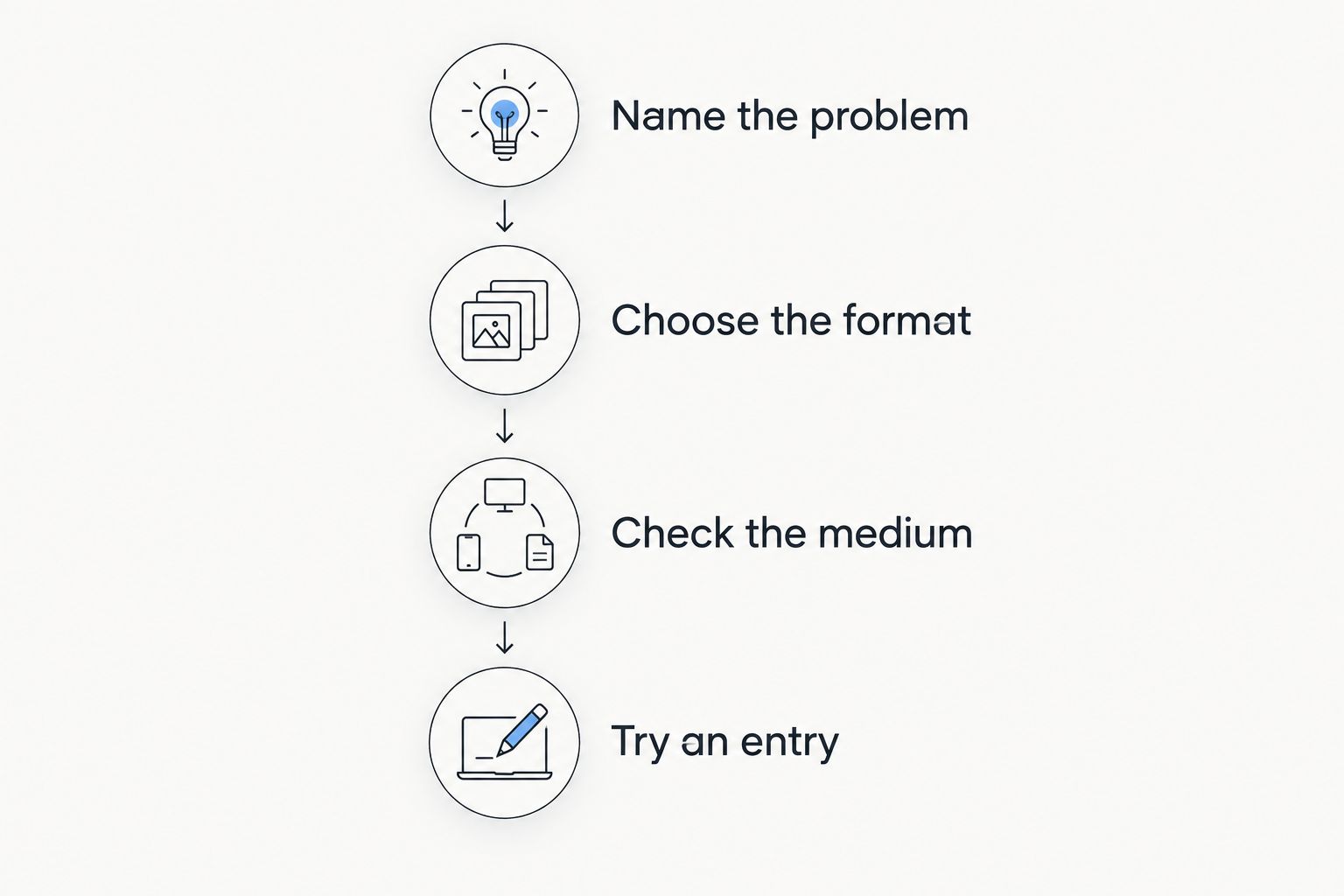
Use this decision sequence before buying:
- Name the problem: Decide whether you need to examine, express, or review.
- Choose the format: Select the page structure that serves that task.
- Check the medium: Confirm file type, device requirements, printing needs, and where entries will be stored.
- Try an entry: Draft an example using the format before committing to a routine.
For a 2026 digital shortlist, read Wanderingsweetsoul listing details for the included pages and requirements. Do not assume a download works with a particular app or includes thought records unless the listing states it.
FAQ
What's the best anxiety journal for a beginner?
A guided check-in anxiety journal is the clearest starting option when you need prompts. Choose a thought-record format instead if your main goal is examining a specific anxious prediction.
Is a digital anxiety journal better than a paper journal?
Neither medium is automatically better. Choose the one you will use, and check access, privacy, file requirements, and whether you prefer typing or handwriting.
What should I write in an anxiety journal?
Write the situation, the concern, and what you need to examine or do next. A thought record adds evidence and a balanced response; a worry log adds space for the later outcome.
Do I need to write in my anxiety journal every day?
Daily writing is not a requirement for using an anxiety journal. Choose a routine that serves your purpose rather than treating a missed entry as a failure.
Can anxiety journaling turn into overthinking?
Journaling can become repetitive when you rewrite the same concern without gaining clarity or choosing a next step. Pause the entry, shorten the format, or discuss the difficulty with a qualified mental health professional.
Does Wanderingsweetsoul sell digital self-care journals?
Wanderingsweetsoul offers digital self-care planners, journals, and workbooks. Read the individual listing to confirm its prompts, file format, and requirements before choosing it as an anxiety journal.
Can an anxiety journal replace therapy?
An anxiety journal does not replace therapy, professional assessment, or prescribed treatment. Use it as a reflection tool, and seek professional support when anxiety interferes with daily life.
One last thing
The stopping rule matters as much as the opening prompt. Before writing, decide what a finished entry looks like: a clearer distinction between fact and prediction, a named need, or an action you control.
You do not need to feel completely certain to close the journal. Keep that boundary in your 2026 routine: the page is finished when it has served its purpose, not when every uncomfortable feeling is gone.