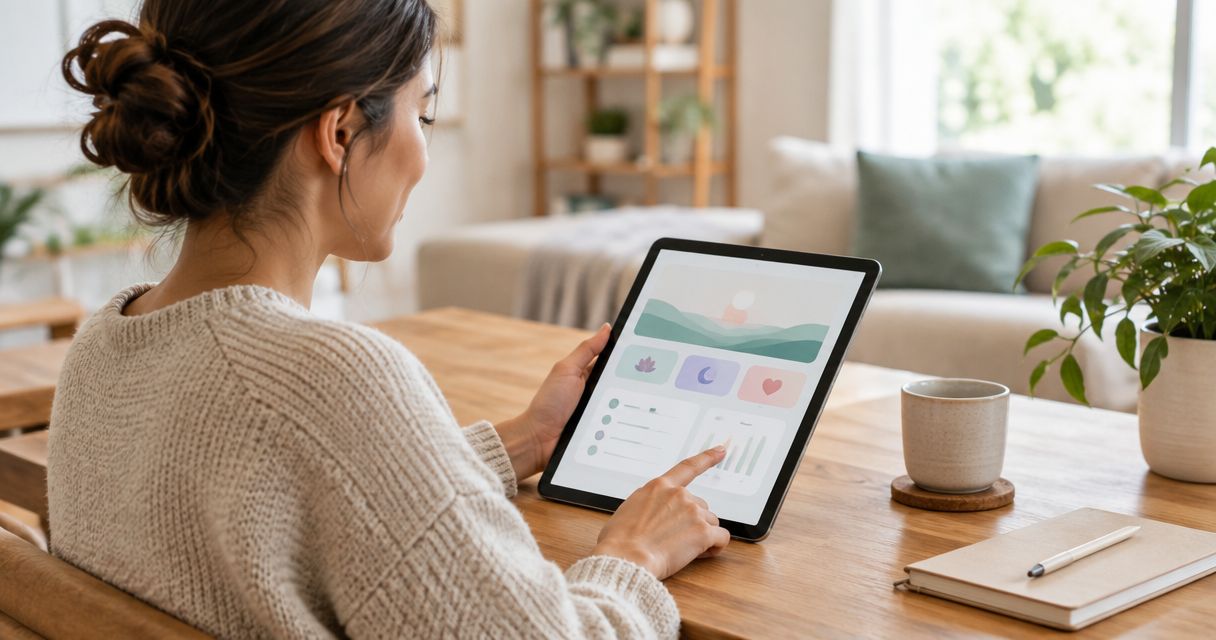
Best overall: a flexible self-care planner. Best for reflection: a journal-led planner. Best for simplicity: a minimalist daily planner. This 2026 guide ranks 10 digital self-care planner formats by the routine they support, with Wanderingsweetsoul as a starting point for self-care planners, journals, and workbooks.
- Choose a flexible digital self care planner when your routine changes from day to day.
- Wanderingsweetsoul suits readers looking for self-care planners alongside journals and workbooks.
- Journal-led planners prioritize reflection; minimalist planners keep daily planning short.
- Compare the actual page preview, file requirements, and privacy setup before choosing a download.
Why this matters
A planner should help you decide what you need, not create another list you feel obliged to finish. The best choice separates useful reflection from unnecessary tracking.
Wanderingsweetsoul offers self-care digital planners, journals, and workbooks, alongside digital products such as adult coloring books. Choose the format for your intended activity rather than treating every self-care download as interchangeable. For your 2026 routine, decide whether you want to plan, reflect, track, or simply pause.
This ranking compares planner formats, not individual named downloads. The pros and cons describe each approach; check a listing's preview for its actual contents.
What makes the best digital self-care planner
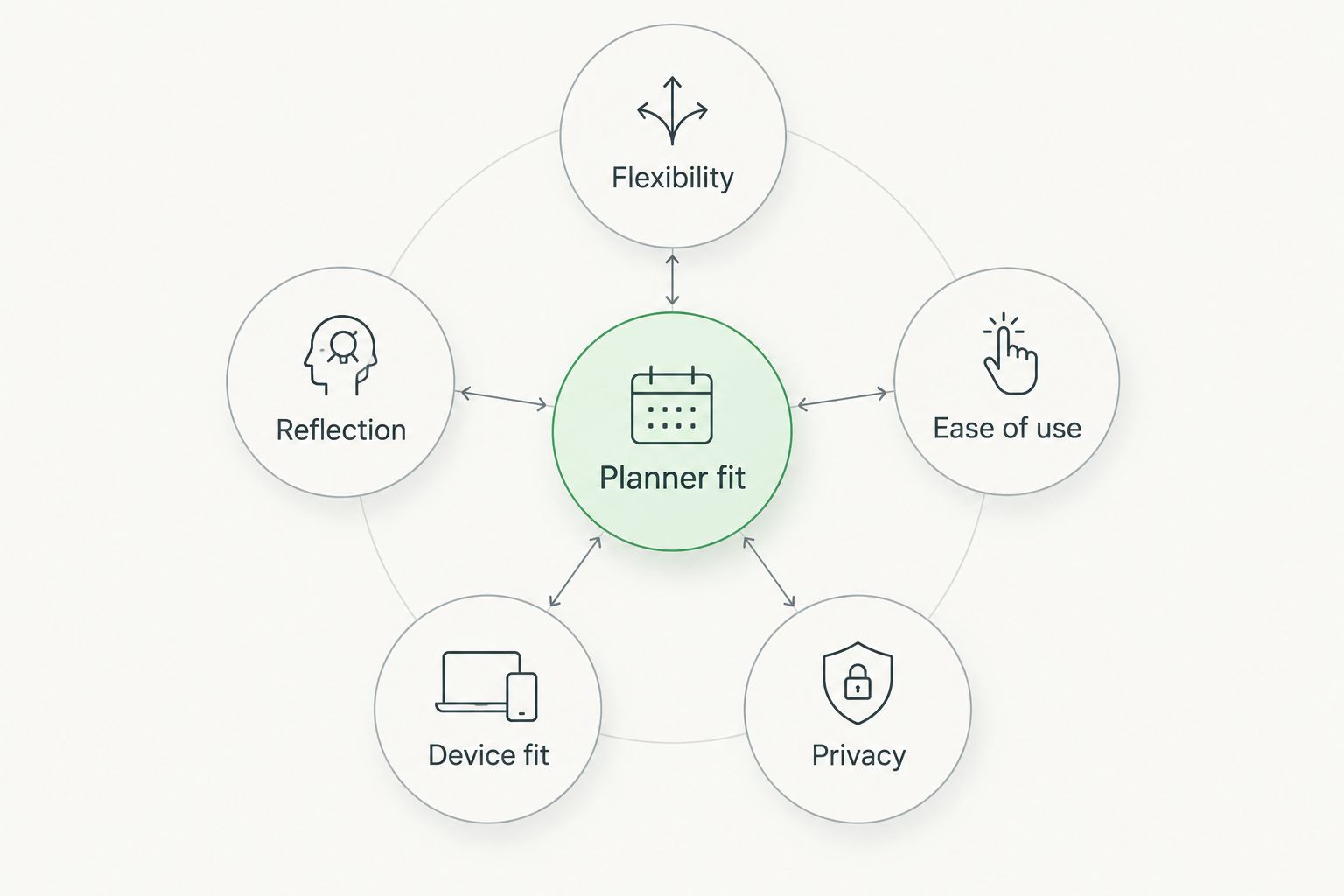
Use these criteria before comparing designs:
- Flexibility: Can you leave sections blank without losing the page's purpose?
- Reflection: Do prompts help you describe needs rather than judge yourself?
- Ease of use: Is the page understandable without a lengthy setup?
- Device fit: Does the stated file format work with your intended device and application?
- Privacy: Can you control where personal entries are stored and shared?
Planner fit matters more than decoration. For a 2026 shortlist, inspect page previews and file instructions before committing to an elaborate layout.
Digital self-care planners at a glance
The 2026 ranking below gives each format a distinct job. Choose the job first; compare appearance afterward.
| Rank and format | Best for | Standout approach | Key limitation |
|---|---|---|---|
| 1. Flexible self-care | Changing routines | Open-ended priorities | Requires you to choose a focus |
| 2. Journal-led | Reflective writing | Prompts and writing space | Writing takes effort |
| 3. Minimalist daily | Low-effort check-ins | A short daily page | Limited detail |
| 4. Habit-focused | Repeating chosen actions | Visible action tracking | Streaks can become pressure |
| 5. Mood-and-context | Noticing personal patterns | Feelings alongside context | Entries do not explain causes |
| 6. Weekly reset | Planning the week | Review plus preparation | Less daily detail |
| 7. Rest-and-boundaries | Protecting downtime | Limits and recovery plans | Requires real-world follow-through |
| 8. Guided workbook | Structured reflection | Sequenced exercises | Less freedom to choose a topic |
| 9. Creative self-care | Expressive breaks | Drawing and visual reflection | Less task organization |
| 10. All-in-one | Keeping records together | Several planning functions | More setup and upkeep |
1. Flexible self-care planner: best for changing routines
A flexible format gives you space to choose today's priorities without requiring every category. Look for open sections rather than assuming a listing includes them. Wanderingsweetsoul's self-care planner category is relevant to this search; judge each download by its preview.
Flexible planner pros:
- Accommodates changing priorities.
- Leaves room for personal definitions of care.
- Supports selective page use.
Flexible planner cons:
- Offers less direction.
- Requires you to choose a focus.
Best for: Readers whose needs change daily. Verdict: Buy this format if flexibility matters most.
2. Journal-led planner: best for reflective writing
A journal-led format puts writing ahead of scheduling. Choose prompts that help you describe an experience without forcing a positive interpretation.
Journal-led planner pros:
- Gives reflection a dedicated space.
- Supports longer written entries.
- Keeps observations separate from tasks.
Journal-led planner cons:
- Requires writing effort.
- Does not replace an appointment calendar.
Best for: Readers who want to understand their experiences through writing. Verdict: Buy for reflection, not detailed scheduling.
3. Minimalist daily planner: best for low-effort check-ins
A minimalist daily format limits the number of decisions on a page. Pick a layout whose essential fields you actually want to complete.
Minimalist planner pros:
- Keeps the page easy to scan.
- Reduces optional sections.
- Makes restarting uncomplicated.
Minimalist planner cons:
- Leaves little space for detail.
- Can feel repetitive.
Best for: Readers who dislike extensive tracking. Verdict: Buy if a short check-in is enough.
4. Habit-focused planner: best for repeating chosen actions
A habit-focused planner records whether you completed an action you selected. Track behavior you control, not a feeling you expect yourself to produce.
Habit planner pros:
- Makes chosen actions visible.
- Supports repeatable routines.
- Provides a record for review.
Habit planner cons:
- Streaks can become pressure.
- Checkboxes omit context.
Best for: Readers building a specific recurring practice. Verdict: Buy for action tracking; skip if streaks feel punitive.
5. Mood-and-context planner: best for personal observations
This format pairs a description of your mood with notes about your day. Record observations without treating a pattern as proof of a cause or diagnosis.
Mood-and-context planner pros:
- Preserves details beyond a mood label.
- Creates space for personal observations.
- Supports reviewing past entries.
Mood-and-context planner cons:
- Requires consistent descriptions.
- Cannot establish medical explanations.
Best for: Readers who want a record of feelings and circumstances. Verdict: Buy for observation, not diagnosis.
6. Weekly reset planner: best for weekly preparation
A weekly reset format combines looking back with choosing what comes next. Keep reflection separate from the upcoming task list so unfinished work does not dominate both.
Weekly reset planner pros:
- Connects review with preparation.
- Groups priorities in one view.
- Avoids requiring daily entries.
Weekly reset planner cons:
- Captures less daily detail.
- Needs a deliberate review session.
Best for: Readers who prefer a weekly overview. Verdict: Buy if daily planning feels excessive.
7. Rest-and-boundaries planner: best for protecting downtime
This approach centers what you will decline, postpone, or leave unscheduled. Write a concrete boundary rather than adding more wellness tasks to an already full day.
Rest-and-boundaries planner pros:
- Gives downtime explicit space.
- Makes limits visible.
- Separates care from productivity.
Rest-and-boundaries planner cons:
- Writing a boundary does not enforce it.
- Other people's demands remain outside your control.
Best for: Readers who need clearer limits. Verdict: Buy if protecting time is your main goal.
8. Guided workbook planner: best for structured reflection
A workbook-led format provides exercises in a defined sequence. Read sample prompts first; a structured page is useful only when its questions fit your purpose.
Workbook planner pros:
- Provides a starting point.
- Organizes exercises by topic.
- Reduces blank-page decisions.
Workbook planner cons:
- Offers less topic freedom.
- Some prompts will not suit you.
Best for: Readers who want direction rather than open journaling. Verdict: Buy only after reviewing sample exercises.
9. Creative self-care planner: best for expressive breaks
A creative format uses drawing, visual notes, or space for personal expression. Choose it for the activity itself, not as a substitute for organizing appointments.
Creative planner pros:
- Provides an alternative to extended writing.
- Allows personal visual expression.
- Separates creative time from task lists.
Creative planner cons:
- Offers less scheduling structure.
- Requires suitable tools for the chosen activity.
Best for: Readers who prefer expressive activities. Verdict: Buy for creative breaks, not detailed planning.
10. All-in-one planner: best for consolidated records
An all-in-one format combines multiple planning functions in one file. Choose it only when you intend to use the included sections, not because a longer contents list looks better.
All-in-one planner pros:
- Keeps related records together.
- Provides several planning views.
- Reduces switching between files.
All-in-one planner cons:
- Requires more setup.
- Unused sections add clutter.
Best for: Readers who already use several planning functions. Verdict: Hold unless you need the extra sections.
How the formats are ranked
This 2026 ranking favors flexibility and ease of use for an undecided reader. Specialized formats rank by purpose, not by claimed health outcomes. A journal-led planner wins for reflection; a weekly reset wins for preparation. Neither is universally better.
Which digital self-care planner should you choose?
Start with a flexible format unless you already know the specific activity you want to support. Wanderingsweetsoul suits readers looking for digital self-care planners alongside journals and workbooks.
For your 2026 setup, try a self-imposed limit of 5 minutes per session, 1 page per session, and a review after 7 days. These are suggested boundaries, not performance benchmarks. Keep the sections that help; leave the rest blank.
FAQ
What's the best digital self care planner for beginners?
A flexible or minimalist digital self-care planner is the clearest starting point for beginners. Choose a page you understand immediately and check the listing's file requirements.
Is a self-care planner better than a journal?
A planner is better for choosing actions; a journal is better for written reflection. A journal-led planner combines those purposes, but inspect its preview before choosing.
Can I use a digital self-care planner on my phone?
Phone use depends on the file and the application you use to open it. Check compatibility instructions and whether the page remains readable on your screen.
Do I need to complete my self-care planner every day?
No, daily completion is not a requirement for personal planning. Choose a weekly format if a daily page creates unnecessary work.
Can a digital planner treat anxiety or depression?
A digital planner is not a substitute for mental health treatment. Use it for personal organization or reflection, and seek qualified care for symptoms that concern you.
What should I check before choosing a digital planner?
Check page previews, file format, application requirements, and storage privacy before choosing. Confirm that the layout supports the activity you actually want to do.
One last thing
Write one boundary before writing another goal. A self-care planner earns its place when it helps you decide what not to do, not merely when it gives you more boxes to complete.