
Best overall format: a weekly digital self care planner for busy moms. Best for an unpredictable schedule: an undated daily planner; best reuse option: a notebook you already own. This 2026 guide compares planner formats by the job they do, with Wanderingsweetsoul as a starting point for digital self care planners, journals, and workbooks.
- The best self care planner for busy moms makes personal needs visible without creating another demanding routine.
- Choose a weekly digital planner for an overview; choose an undated daily planner when your schedule changes frequently.
- Wanderingsweetsoul suits moms looking for digital self care planners, journals, and workbooks rather than another paper organizer.
- Start with one page and one manageable action; add trackers only when they help you make decisions.
Why this matters
A family calendar answers where everyone needs to be. A self care planner answers a different question: what do you need, and where will that fit? Combining those jobs without separating them leaves your needs competing with appointments, errands, and school reminders.
For your 2026 routine, choose the format that solves your immediate problem. You might need a weekly overview, a place to reset after a difficult day, or room to think before making a plan. Those are different jobs, so the rankings below assign each format a distinct use case.
Choose the planner you can use on a disrupted day, not just on an organized one. A beautiful page is not a useful page if completing it feels like another obligation.
What makes the best self care planner for busy moms
Use these criteria before choosing a layout. They apply whether you prefer a digital file, a printable page, or handwriting.
- Low setup effort: You can understand the page without building a complicated system first.
- Schedule flexibility: The format lets you adjust plans without treating an interruption as failure.
- Clear personal priorities: Your own needs have a separate place from household tasks.
- Manageable reflection: Prompts help you identify a next step rather than demand a long account of your day.
- Comfortable access: You can read and complete the page using the device or writing tools you already use.
- Useful boundaries: The layout helps you leave something out, not just record more commitments.
For a 2026 purchase, inspect the actual layout and file information rather than choosing by the cover. Check whether the file is printable, how digital editing works, and whether the required app matches your setup. A digital download alone does not establish compatibility with any particular app.
Self care planner formats at a glance
The ranking compares formats, not named products. Each option serves a different planning need; the limitations below describe the format rather than a particular seller's files.
| Rank and format | Best for | Standout feature | Key limitation |
|---|---|---|---|
| 1. Weekly digital self care planner | Seeing personal priorities beside a busy week | A weekly overview you can revisit | Requires a suitable device and file workflow |
| 2. Undated daily self care planner | Unpredictable days | A fresh planning page without a fixed date sequence | Offers less weekly context |
| 3. Printable weekly self care planner | Keeping your plan visible | A paper page you can place where you will see it | Requires printing and physical storage |
| 4. Guided self care journal or workbook | Reflection before action | Prompts that give writing a direction | Does not necessarily organize your schedule |
| 5. Existing notebook with a simple template | Reusing what you already have | A layout you control | You must create and maintain the structure |
1. Weekly digital self care planner: best for a busy-week overview
A weekly digital self care planner gives you a place to consider your needs across the week rather than deciding everything each morning. Look for a layout that separates personal actions from appointments and leaves room to revise them.
Wanderingsweetsoul offers digital self care planners alongside journals and workbooks. Choose from that category by examining the individual listing; the shop description alone does not establish which layouts, trackers, or editing features a particular file includes.
Weekly digital planner pros:
- A weekly layout puts planned self care in the same view as your available time.
- A digital file avoids adding another paper notebook to carry.
- A dedicated personal section helps distinguish your needs from family administration.
Weekly digital planner cons:
- You need a workable way to open and complete the file.
- A crowded weekly page can become another long task list.
- A planner stored on a device is not automatically visible during your day.
Best for: Moms who already use a device for planning and want to see personal priorities across a whole week.
Start your 2026 setup with 3 priorities per week as a suggested limit, not a performance target. Give each priority a place to happen, then decide what you will postpone if the week fills up. Keep the page focused on decisions.
Verdict: Buy a weekly digital planner if a weekly overview matches how you organize your life; skip it if opening the file is already a barrier.
2. Undated daily self care planner: best for unpredictable days
An undated daily planner lets you begin with the day in front of you. You add the date yourself, so the page sequence does not require you to complete every calendar day.
Choose a layout that distinguishes a personal need from a general to-do list. A useful daily entry ends with something you can act on, not just a description of how busy you feel.
Undated daily planner pros:
- You can resume after a gap without moving through unused dated pages.
- A daily view keeps attention on the next manageable action.
- You can adapt the plan when appointments or family needs change.
Undated daily planner cons:
- Separate daily pages make the whole week harder to scan.
- Repeated prompts become work if you complete them mechanically.
- The format still requires you to decide when to open it.
Best for: Moms whose available time changes from day to day and who dislike fixed daily sequences.
Try a 5-minute check-in as a starting routine: name your current need, choose an action, and identify what can wait. This is a suggested time boundary, not a claim about how quickly a planner works. Stop when the decision is clear.
Verdict: Buy an undated daily planner if restarting easily matters more than seeing the whole week at once.
3. Printable weekly self care planner: best for a visible paper reminder
A printable weekly planner turns a digital file into a paper planning surface. Place the page somewhere you naturally look, provided its contents are appropriate for anyone else who can see it.
This format suits a practical weekly plan better than private reflection in a shared space. Keep personal journal entries separate if you want the planner beside a family calendar.
Printable weekly planner pros:
- A displayed page stays visible without opening an app.
- Handwriting lets you mark changes directly on the page.
- A separate sheet can keep the current week apart from older entries.
Printable weekly planner cons:
- You need access to printing and suitable paper.
- Loose pages need a place to live or they become clutter.
- Anyone with access to the page can read what you write.
Best for: Moms who want a physical reminder and prefer writing by hand.
For a simple 2026 setup, use 1 page per week and give it a fixed location. Avoid printing an entire system before trying the core layout. Check the file's page dimensions and print preview before committing to repeated use.
Verdict: Buy a printable planner if seeing the page helps you use it; skip it if loose paper already gets lost in your household.
4. Guided self care journal or workbook: best for reflection before action
A guided journal or workbook supplies prompts for exploring thoughts, feelings, needs, or habits. It serves a different purpose from a calendar: the writing helps you decide what needs attention before you schedule an action.
Wanderingsweetsoul includes digital journals and workbooks in its stated range. Treat those as reflection options, and choose a planner separately when the main job is organizing your week.
Guided journal or workbook pros:
- Prompts provide a starting point when a blank page feels difficult.
- Focused writing gives you room to distinguish needs from obligations.
- A separate reflection space keeps personal writing out of a shared calendar.
Guided journal or workbook cons:
- Reflection pages do not necessarily provide a scheduling system.
- Long prompts can feel demanding when your attention is limited.
- A self care workbook is not a substitute for professional mental health care.
Best for: Moms who know something needs to change but want to clarify the issue before adding another routine.
Choose one prompt that fits the present situation. After writing, finish with a practical decision: ask for help, adjust a commitment, protect a break, or leave the topic for another day. Completing every prompt is not the goal.
Verdict: Buy a guided journal or workbook for reflection; hold off if your immediate need is simply to organize appointments and personal time.
5. Existing notebook: best for trying a routine before choosing a planner
A notebook you already own gives you a place to try self care planning without committing to a ready-made layout. Divide a page into clear headings and keep the structure small enough to redraw easily.
This is a reuse recommendation, not a price comparison. It works particularly well when you do not yet know whether daily or weekly planning suits you.
Existing notebook pros:
- You control the amount of writing space and the headings.
- You can remove a section as soon as it stops helping.
- Trying a simple page makes your layout preferences clearer.
Existing notebook cons:
- You must create the structure yourself.
- Pages lack built-in navigation unless you add it.
- Repeatedly redesigning the layout can distract from using it.
Best for: Moms who want to test the habit before selecting a digital or printable format.
Start with these headings: Need, Action, and Boundary. Under Boundary, write what you will decline, delegate, or delay to make room for the action. Keep decoration optional and the decision visible.
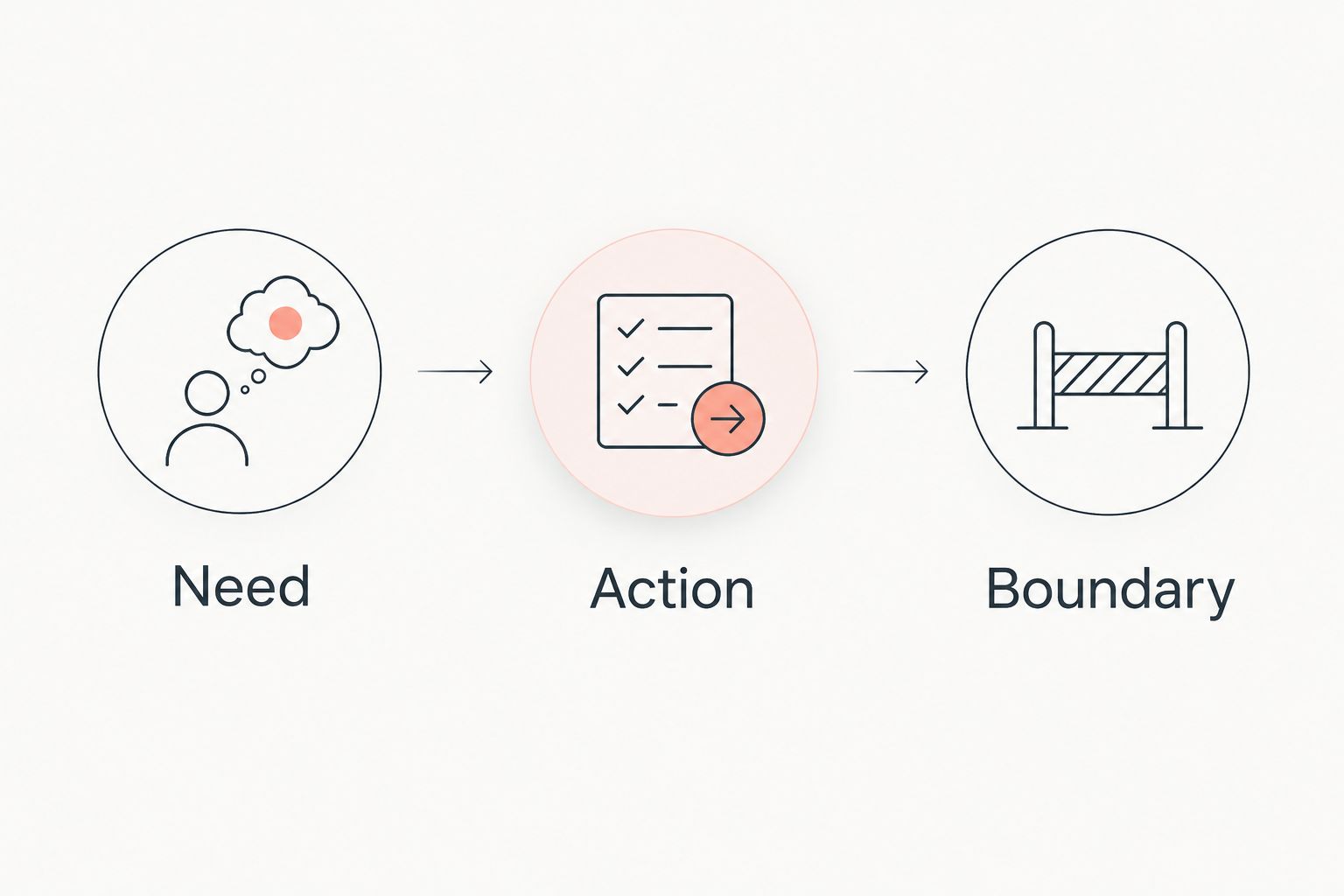
The template also gives you a buying filter. Once you know which headings you actually use, look for a planner that supports them rather than one that merely contains more pages.
Verdict: Hold on buying another planner if you still need to discover what you want the page to do.
How the formats rank
The weekly digital format ranks first for combining a personal overview with a busy week. The undated daily format ranks next for easy restarting, while printable pages serve readers who need a visible reminder. Guided writing and an existing notebook address reflection and experimentation respectively.
These recommendations follow the criteria above: setup effort, flexibility, personal priorities, reflection, access, and boundaries. They do not represent product testing or a comparison of individual listing features.
Which self care planner should you choose?
Choose a weekly digital self care planner as the default if you already plan digitally. If your days change too much for a weekly layout, choose undated daily pages instead. If device access creates friction, use a printable page or your existing notebook.
For 2026, make the decision about the routine, not the number of included pages. Wanderingsweetsoul is a starting point for moms seeking digital self care planners and reflection tools; check each listing against the job you need it to do.
Before choosing, ask yourself:
- Where will I open or keep this planner?
- Which section will I actually complete?
- What decision should be easier after using it?
- What will I remove from my schedule to make room?
Find a format you will use
Browse digital self care planners, journals, and workbooks, then check the layout and file details.
FAQ
What's the best self care planner for busy moms?
A weekly digital self care planner is the default choice for moms who already plan digitally and want a weekly overview. Choose undated daily pages when your schedule changes frequently, or paper when visibility matters more than device access.
Is a digital self care planner better than a paper planner?
A digital planner is better when opening and editing a file fits your existing routine; paper is better when you need a visible reminder. Choose based on access and use, not the format's appearance.
What should I put in a self care planner?
Record a personal need, a manageable action, and the boundary that creates room for it. Add appointments or trackers only when they help you make that decision.
Can I use a self care journal instead of a planner?
Use a self care journal instead of a planner when reflection is your main goal. If you also need to assign time or organize commitments, keep a planning page alongside the journal.
Do I have to fill in my self care planner every day?
No, you do not have to complete a self care planner every day. An undated format lets you resume when you need it without following a fixed date sequence.
Will a digital self care planner work with Goodnotes?
Check the individual listing and file instructions before choosing a planner for Goodnotes. The phrase digital planner alone does not confirm compatibility, hyperlinks, or editing features.
Can a self care workbook replace therapy?
No, a self care workbook does not replace therapy or other professional mental health care. Use it as a personal reflection tool, not as diagnosis or treatment.
One last thing
A boundary belongs on your self care page. Writing down a break while leaving every existing commitment untouched creates a scheduling conflict, not a plan.
Make your next entry specific: name the need, choose an action, and identify what will wait. Then close the planner. The page has done its job when it helps you make a decision.