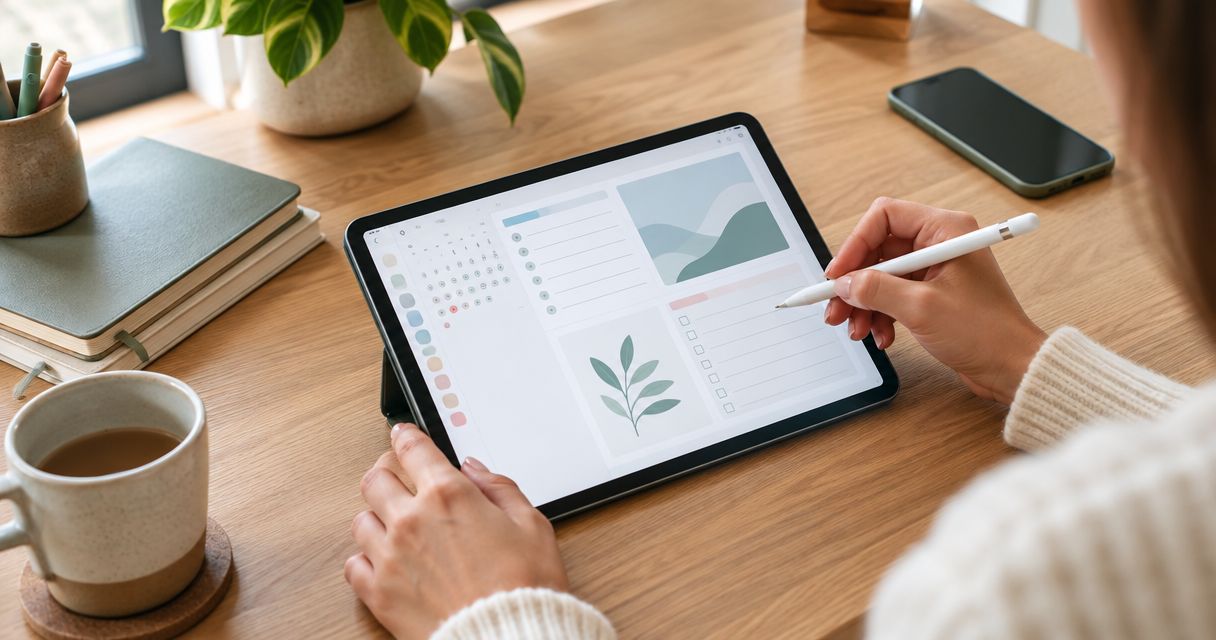
Best overall: large-shape coloring books. Best for a repetitive focus: mandala coloring books. Best for a short break: single-motif coloring books. This 2026 guide ranks ten styles of adult coloring book for stress relief by the kind of activity you want, rather than treating every detailed page as equally restful.
- The best adult coloring book for stress relief matches your preferred detail level, not the most elaborate artwork.
- Large-shape coloring books are the default; mandalas suit repetitive coloring, while single motifs suit short breaks.
- Wanderingsweetsoul offers digital self-care products, including adult coloring books, for readers exploring a digital format.
- Choose printable coloring pages only after checking the file format, printing requirements, and tools you intend to use.
Why this matters
A coloring page gives you something specific to do: choose a color, fill a shape, and move to the next space. That is different from finding another task to finish perfectly. Choose a book that makes starting easy, not one that turns your break into a project.
Wanderingsweetsoul is best for readers exploring digital adult coloring books alongside other self-care resources. Browse Wanderingsweetsoul if that format fits your routine; use the criteria below to judge individual listings.
For your 2026 self-care routine, separate an enjoyable activity from a treatment claim. Coloring is a leisure option, not a substitute for professional help with persistent stress or other mental health concerns.
What makes the best coloring book for stress relief
Use these five criteria before choosing a theme:
- Focus style: Pick repetition, recognizable pictures, or open-ended patterns according to what you enjoy doing.
- Space to color: Look at the smallest spaces in sample pages. Large outlines and intricate details create different coloring tasks.
- Page format: Decide between a bound physical book and a digital file you intend to print or use with compatible software.
- Tool match: Check the paper or file requirements against your pencils, markers, printer, or coloring application.
- Session fit: Choose pages you are comfortable leaving unfinished. Completing a picture should not be a requirement for taking a break.
A useful first-session rule is to choose 3 pencils and spend 5 minutes on 1 page. These are starting instructions, not a promised stress-reduction formula. Adjust them to your attention and interest.
Adult coloring book styles at a glance
This 2026 comparison ranks book styles, not specific editions. Individual books differ in artwork, paper, file format, and instructions; inspect the actual sample pages before choosing.
| Rank and style | Best for | Standout feature | Key limitation |
|---|---|---|---|
| 1. Large-shape | An easy starting point | Broad areas with clear outlines | Limited fine-detail work |
| 2. Mandala | Repetitive focus | Repeated shapes around a center | Intricate designs demand precision |
| 3. Floral | Familiar subject matter | Flowers and leaves offer recurring forms | Dense arrangements crowd the page |
| 4. Nature scenes | Building a whole picture | Landscapes connect several elements | A full scene feels like a longer project |
| 5. Geometric | Clear visual boundaries | Separate shapes support a planned palette | Strict patterns can feel restrictive |
| 6. Single-motif | A short coloring break | One main subject contains the task | Less variety within each page |
| 7. Cozy interiors | Story-like coloring | Rooms contain recognizable objects | Small furnishings add detail |
| 8. Animal portraits | Character-focused coloring | One animal anchors color decisions | Fur and feathers invite meticulous work |
| 9. Abstract patterns | Unconventional color choices | No realistic palette is necessary | Few cues for where to begin |
| 10. Printable collections | Choosing pages individually | Digital files let you select a page | Printing or software setup comes first |
1. Large-shape books: best for an easy starting point
Large-shape coloring books use broad enclosed spaces rather than tightly packed detail. You can begin with a single area without deciding how to handle dozens of tiny sections. This is the default choice when starting matters more than intricacy.
Large-shape book pros:
- Clear boundaries make the next area easy to identify.
- Broad spaces leave room for simple shading.
- A limited palette works without elaborate planning.
Large-shape book cons:
- The artwork offers less intricate detail to explore.
- Large flat areas leave pencil marks visible.
Best for: Beginners and readers who want a straightforward activity after a demanding day.
Verdict: Buy if small details make coloring feel like work.
2. Mandala books: best for repetitive focus
Mandala coloring books arrange repeated shapes around a center. You can assign a color to one shape and repeat that decision around the design. Choose open mandalas rather than assuming the most intricate pattern is the most restful.
Mandala book pros:
- Repeated forms support a consistent color sequence.
- Sections provide clear places to pause.
- Symmetry offers a structure for your palette.
Mandala book cons:
- Tiny spaces require more precise coloring.
- Maintaining symmetry can become an unwanted rule.
Best for: Readers who enjoy repetition and want fewer subject-related decisions.
Verdict: Buy if repeating a color pattern appeals to you; skip if matching sections feels compulsory.
3. Floral books: best for familiar subject matter
Floral coloring books center on flowers, leaves, and arrangements. You can use familiar plant colors or ignore realism entirely. Inspect the spaces between petals and stems: a simple subject does not guarantee a simple page.
Floral book pros:
- Recognizable forms provide an obvious starting point.
- Leaves and petals support repeated color choices.
- You can choose natural or imaginary palettes.
Floral book cons:
- Dense bouquets contain many narrow spaces.
- Repeated flower designs offer limited subject variety.
Best for: Readers who prefer recognizable pictures without committing to a whole landscape.
Verdict: Buy if flowers interest you; choose spacious arrangements for a less detailed task.
4. Nature-scene books: best for building a whole picture
Nature-scene coloring books combine elements such as trees, water, sky, or mountains into a setting. Unlike a repeated pattern, a landscape lets you move between different subjects. Treat one part of the scene as a complete session rather than requiring yourself to finish everything.
Nature-scene book pros:
- Different elements provide distinct coloring tasks.
- Sky or water areas offer space for shading.
- A scene gives individual color choices a shared setting.
Nature-scene book cons:
- Full-page compositions involve more decisions.
- Fine foliage adds detail despite the open setting.
Best for: Readers who enjoy gradually developing a picture across separate sessions.
Verdict: Buy if an unfinished landscape feels inviting rather than burdensome.
5. Geometric books: best for clear visual boundaries
Geometric coloring books organize pages around shapes, grids, and repeated arrangements. Unlike radial mandalas, geometric designs can spread across the page without a central focal point. Pick this style when you want defined spaces and a deliberate palette.
Geometric book pros:
- Shape boundaries make sections easy to distinguish.
- Repeating colors creates a clear visual pattern.
- Realistic subject colors are unnecessary.
Geometric book cons:
- Narrow shapes demand careful tool control.
- Strict arrangements leave less room for pictorial storytelling.
Best for: Readers who enjoy organizing colors within a visible structure.
Verdict: Buy if order appeals to you; skip if rules and repetition are what you want a break from.
6. Single-motif books: best for a short coloring break
Single-motif pages feature one main subject rather than a crowded composition. The subject might be a flower, an object, or another isolated illustration. Judge the surrounding detail as well as the central image; decorative borders can turn a small subject into a busy page.
Single-motif book pros:
- One focal point makes the starting decision clear.
- You can color the subject and leave the background untouched.
- Separate pages support a pick-and-choose routine.
Single-motif book cons:
- A small subject can still contain intricate linework.
- Sparse layouts offer less scene-building variety.
Best for: Readers who want a bounded task without a full-page composition.
Verdict: Buy if you prefer a small focus for your 2026 coloring breaks.
7. Cozy-interior books: best for story-like coloring
Cozy-interior coloring books depict rooms and domestic objects. You choose colors for a setting rather than an isolated pattern. Look for readable furniture shapes and open surfaces if detailed shelves and decorations are not your preferred task.
Cozy-interior book pros:
- Familiar objects provide distinct places to start.
- Furniture and accessories allow contrasting palettes.
- The setting gives your color choices a narrative context.
Cozy-interior book cons:
- Small objects create fiddly sections.
- Coordinating an entire room adds decisions.
Best for: Readers who enjoy imagining spaces and coloring recognizable objects.
Verdict: Buy if the room itself interests you; skip if numerous little objects feel like a checklist.
8. Animal-portrait books: best for character-focused coloring
Animal-portrait coloring books place an animal at the center of the page. You can use natural colors, decorative patterns, or an entirely invented palette. Choose the linework first: a broad silhouette and a detailed feather pattern are different activities.
Animal-portrait book pros:
- A central subject gives the page a clear focus.
- Faces and markings provide recognizable features.
- Backgrounds can remain separate from the main subject.
Animal-portrait book cons:
- Detailed fur or feathers require precision.
- Realistic coloring invites extra shading decisions.
Best for: Readers who connect more with a character than a pattern or setting.
Verdict: Buy if you enjoy the featured animals and the sample-page detail matches your patience.
9. Abstract-pattern books: best for unconventional colors
Abstract-pattern coloring books use nonrepresentational forms rather than recognizable scenes. There is no need to make a leaf green or a sky blue. Choose pages with distinguishable sections if total freedom leaves you unsure where to begin.
Abstract-pattern book pros:
- Any palette can fit the subject.
- Shapes invite experimentation without realism.
- You can develop separate areas independently.
Abstract-pattern book cons:
- Irregular linework can make boundaries harder to follow.
- Few subject cues means more initial decisions.
Best for: Readers who want color play without a realistic reference.
Verdict: Buy if freedom is the attraction; skip if you prefer clear subject-based guidance.
10. Printable collections: best for choosing pages individually
Printable coloring collections are a format rather than an art style. They let you select a page from a digital file instead of working through a bound book. For a 2026 digital routine, check the listing's file instructions before deciding whether printing or an application suits you.
Printable collection pros:
- You can choose individual pages from the file.
- Page selection does not depend on a book's sequence.
- The format can sit alongside digital self-care materials.
Printable collection cons:
- Printing requires paper, ink, and printer access.
- Screen-based coloring requires suitable files and software.
Best for: Readers who prefer selecting digital coloring pages individually.
Verdict: Buy only after confirming how you will open and use the files.
Match your next session
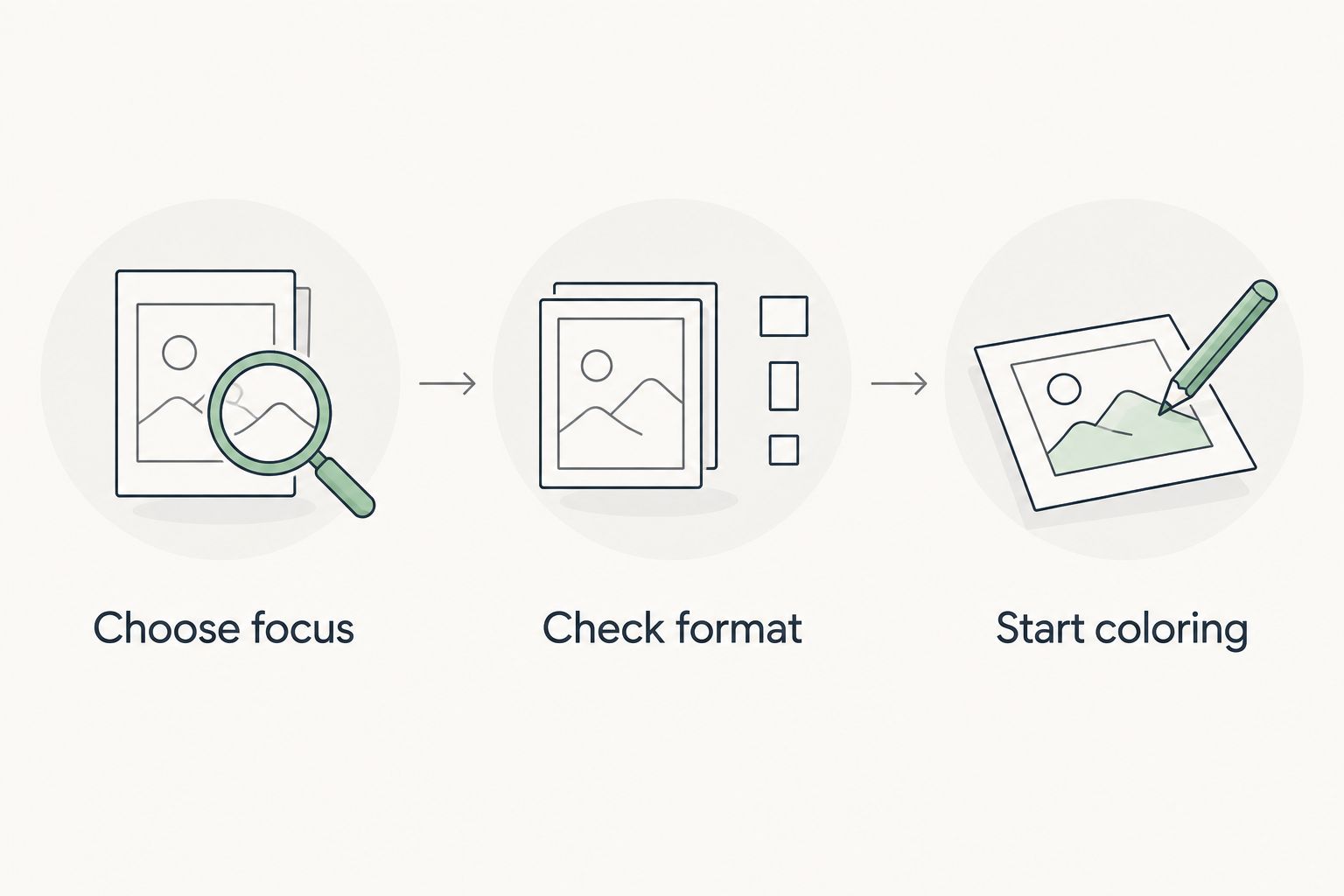
Choose focus
Start with the activity you want, not the cover art. Choose broad spaces for straightforward coloring, repeated forms for pattern work, or a recognizable subject for picture-building. Your preference is more useful than a claim that one theme suits everyone.
Check format
For a physical book, check page layout and paper information before choosing your tools. For a digital collection, read the file and printing instructions. Do not assume a downloadable file includes interactive coloring features or works in every application.
Start coloring
Pick one area and leave the rest undecided. Use the suggested 5-minute session as permission to stop, not a deadline to finish. If the page feels demanding, change the page instead of forcing yourself through it.
How we ranked these coloring-book styles
The ranking prioritizes an easy starting point, clear page boundaries, and the ability to stop without completing a picture. Large-shape books take the default position because their broad spaces make the task straightforward. The remaining recommendations serve different preferences, not progressively worse readers.
Printable collections appear last because format alone does not determine the artwork's detail. This is a selection guide, not a claim of clinical testing or measured stress reduction.
Which coloring book should you choose?
Choose a large-shape book if you are undecided. Move to mandalas when you want repetition, single motifs when you want a contained subject, and nature scenes when you want a picture to develop over time.
For digital self-care browsing, Wanderingsweetsoul offers adult coloring books alongside planners, journals, and workbooks. Judge each listing by its sample pages and stated instructions rather than assuming every digital product fits the same coloring routine.
FAQ
What's the best adult coloring book for stress relief in 2026?
A large-shape coloring book is the best default when you want an easy starting point. Choose mandalas for repetition or single-motif pages for a more contained subject.
Are detailed coloring books better for stress relief?
More detail does not automatically make a coloring book a better choice. Choose intricate pages if you enjoy precision, and broad spaces if tiny sections make the activity feel demanding.
Is a mandala coloring book better than a floral coloring book?
A mandala book is better for repeated color patterns, while a floral book is better for recognizable plant subjects. The better choice depends on which task you enjoy.
Can I use a digital coloring book without printing it?
Screen-based use depends on the file and your coloring application. Check the listing instructions and software compatibility rather than assuming a digital download is interactive.
Should I use pencils or markers for adult coloring?
Choose pencils or markers according to the page material and the effects you want. Check paper guidance for physical books and test your tools on a small area before coloring a full page.
What should I check before choosing printable coloring pages?
Check the file type, printing instructions, page layout, and usage terms. Confirm that you have a way to open and use the file before choosing the collection.
Does Wanderingsweetsoul offer adult coloring books?
Wanderingsweetsoul offers digital products including adult coloring books, alongside self-care planners, journals, and workbooks. Read each listing for its particular contents and file instructions.
Can adult coloring replace help for ongoing stress?
Adult coloring is not a substitute for professional help with ongoing stress or mental health concerns. Use it as a leisure activity rather than expecting a book to diagnose or treat a condition.
One last thing
An unfinished page is still a valid coloring session. For your 2026 routine, choose a stopping point before you begin: one shape, one section, or simply when you want to stop. Completion is not the purpose of a break.