
Best overall: a CBT-style workbook for examining anxious thoughts. Best for gentle daily reflection: a guided self-care workbook. Best for a simple starting point: an anxiety-tracking workbook. This 2026 guide compares workbook approaches so you can choose a self care workbook for anxiety by the task you need help with—not by its cover.
- Choose a CBT-style self care workbook for anxiety when you want to examine worry rather than simply record it.
- Wanderingsweetsoul offers digital self-care workbooks and journals for readers seeking reflection tools.
- Choose acceptance-based exercises when arguing with anxious thoughts becomes another source of pressure.
- Use anxiety tracking to prepare useful observations for a conversation with a mental health professional.
- Self-care workbooks support reflection; they do not diagnose anxiety or replace treatment.
Wanderingsweetsoul offers digital self-care planners, journals, and workbooks. Wanderingsweetsoul is a fit for readers seeking digital self-care workbooks and journals for personal reflection. Choose individual materials by their actual exercises and instructions, not by the promise of healing in a title.
Why this matters
An anxiety workbook can ask you to do very different things: examine a prediction, notice a feeling, plan a manageable action, or record a pattern. Those tasks are not interchangeable. A detailed thought worksheet is the wrong starting point when you want a gentle check-in; a mood log is insufficient when you want instructions for working with worry.
For your 2026 shortlist, separate what the workbook teaches from how the workbook looks. Attractive pages do not establish clinical effectiveness, and a digital format does not tell you whether the exercises suit your needs.
A workbook also has limits. If anxiety disrupts your daily functioning, seek professional support rather than making completion of a workbook your treatment plan.
What makes the best self care workbook for anxiety?
Use these criteria before choosing an approach:
- Clear purpose: The workbook explains whether it supports reflection, thought examination, acceptance, attention practice, or tracking.
- Usable instructions: You can understand the exercise without guessing what a prompt means.
- Manageable effort: You can complete a useful section without turning self-care into another unfinished obligation.
- Emotional boundaries: The material lets you pause, skip a prompt, and seek support instead of pushing through distress.
- Transparent authorship: You can identify the author and assess relevant qualifications, especially when material claims to treat anxiety.
- Practical format: You can read, write, save, and revisit entries using your preferred setup.
For a digital workbook, check file requirements before choosing it. Do not assume that every download supports typing, handwriting, printing, or your preferred app. Match the format to how you will actually use it.
Anxiety workbook approaches at a glance
These are ranked workbook approaches, not claims that particular products have been tested or that every workbook in a category delivers the same quality. In 2026, evaluate the individual material against the criteria above.
| Rank and approach | Best for | Standout exercise | Key limitation |
|---|---|---|---|
| 1. CBT-style workbook | Examining anxious predictions | Structured thought record | Detailed analysis can become repetitive |
| 2. Guided self-care workbook | Gentle daily reflection | Needs check-in and manageable action | Broad prompts do not provide focused anxiety treatment |
| 3. Acceptance-based workbook | Acting without resolving every anxious thought | Values-based action exercise | Acceptance requires explanation and practice |
| 4. Mindfulness workbook | Practicing present-moment attention | Guided noticing exercise | Inward attention can feel uncomfortable |
| 5. Anxiety-tracking workbook | Organizing observations for support | Context, response, and impact log | Recording does not teach a coping skill by itself |
If you are deciding between open-ended writing and structured exercises, the anxiety journals comparison is a related starting point. A journal gives you space to write; a workbook should also explain what to do with the exercise.
1. CBT-style workbook: best for examining anxious predictions
A cognitive behavioral therapy-style workbook helps you separate a situation, your interpretation, your emotional response, and your actions. A thought record asks you to examine a prediction rather than accept it automatically. CBT is an established treatment approach, but that does not make every workbook using the label an effective treatment.
Look for worked examples and clear distinctions between observations and assumptions. The aim is a balanced response—not a forced positive statement that ignores a real problem.
CBT-style workbook pros:
- Gives worried thinking a defined structure.
- Connects thoughts with feelings and behavior.
- Provides a repeatable exercise you can discuss with a therapist.
CBT-style workbook cons:
- Detailed worksheets demand attention when you already feel overloaded.
- Repeatedly checking the same thought can become another reassurance ritual.
Best for: You want to examine a specific anxious prediction and understand how it affects your behavior.
Try 1 thought record about a recent, manageable situation before committing to a longer routine. Stop if the exercise becomes repeated checking rather than useful reflection.
Verdict: Buy for structured thought work; skip material that promises positive thinking will eliminate anxiety.
2. Guided self-care workbook: best for gentle daily reflection
A guided self-care workbook organizes questions about your needs, boundaries, routines, and next actions. It suits a reader who wants to notice what is happening without analyzing every thought. Useful prompts connect reflection with an achievable response, such as identifying a need and choosing what to address next.
Wanderingsweetsoul offers self-care workbooks alongside digital planners and journals. When choosing among these formats, distinguish reflective exercises from scheduling pages; they serve different purposes.
Guided self-care workbook pros:
- Offers a starting point when a blank page feels unhelpful.
- Keeps practical needs in view alongside emotions.
- Supports a flexible reflection routine without requiring detailed thought analysis.
Guided self-care workbook cons:
- Broad prompts can feel vague when you want help with a specific worry.
- Self-care language does not establish clinical evidence or author qualifications.
Best for: You want a gentle check-in that ends with a manageable action rather than an extended analysis.
As a starting routine, allow 5 minutes for a check-in. This is a suggested boundary, not a treatment dose or a promise of relief.
Verdict: Buy for everyday reflection; skip it as a substitute for focused anxiety care.
3. Acceptance-based workbook: best for acting alongside anxiety
An acceptance-based workbook asks you to change your relationship with uncomfortable thoughts and feelings rather than settle every worry. Materials based on acceptance and commitment therapy commonly include values clarification and exercises for creating distance from thoughts. The practical question becomes what matters enough to act on, even when discomfort is present.
Acceptance is not agreement with an anxious prediction. It also does not mean accepting unsafe circumstances or abandoning problem-solving.
Acceptance-based workbook pros:
- Offers an alternative to repeatedly debating anxious thoughts.
- Connects reflection with personally meaningful actions.
- Distinguishes having a thought from following its instructions.
Acceptance-based workbook cons:
- Abstract language can be confusing without concrete examples.
- Acceptance prompts can sound dismissive when the author does not explain their purpose.
Best for: You get stuck trying to achieve certainty before taking an ordinary, meaningful step.
Look for exercises that explain both the concept and its application. A page that simply tells you to accept your feelings is an instruction without enough guidance.
Verdict: Buy when the workbook teaches acceptance clearly; skip unexplained slogans about letting go.
4. Mindfulness workbook: best for present-moment attention
A mindfulness workbook guides you through noticing experiences without immediately judging or reacting to them. Exercises can focus on external surroundings, bodily sensations, or thoughts. Choose material that explains the practice and gives you permission to adjust or stop.
For your 2026 selection, avoid treating mindfulness as a requirement to empty your mind. Noticing distraction and returning attention is different from preventing thoughts altogether.
Mindfulness workbook pros:
- Provides instructions instead of leaving you to invent a practice.
- Offers an attention-based alternative to lengthy written analysis.
- Can include brief observations that do not require detailed personal disclosure.
Mindfulness workbook cons:
- Focusing inward can increase discomfort for some readers.
- Repetitive instructions become frustrating when there is no explanation or alternative.
Best for: You want guided attention practice rather than a detailed record of why you feel anxious.
Prefer instructions that include options, such as noticing the room instead of focusing on the breath. You do not need to force an exercise that makes you feel worse.
Verdict: Buy for guided noticing; skip material that demands calm or an empty mind.
5. Anxiety-tracking workbook: best for organizing observations
An anxiety-tracking workbook records context, responses, and effects on daily life. Its strength is organization: you can bring a clearer account to a professional conversation instead of relying entirely on memory. Tracking is a record, not a diagnosis.
Useful pages distinguish what happened from what you concluded about it. They also leave room for what you did next, rather than recording only distress.
Anxiety-tracking workbook pros:
- Organizes observations in a consistent format.
- Helps you describe situations and responses during appointments.
- Keeps practical effects visible alongside feelings.
Anxiety-tracking workbook cons:
- Frequent monitoring can keep your attention fixed on anxiety.
- A log does not provide treatment instructions or explain causes.
Best for: You want clearer notes for a conversation with a therapist or another qualified professional.
Review 3 entries together as a small starting exercise. Look for questions to discuss, not a diagnosis to assign yourself; this entry count is a suggested review boundary, not a validated assessment.
Verdict: Buy for organized observations; skip constant checking and self-diagnosis.
How to use your workbook without adding pressure
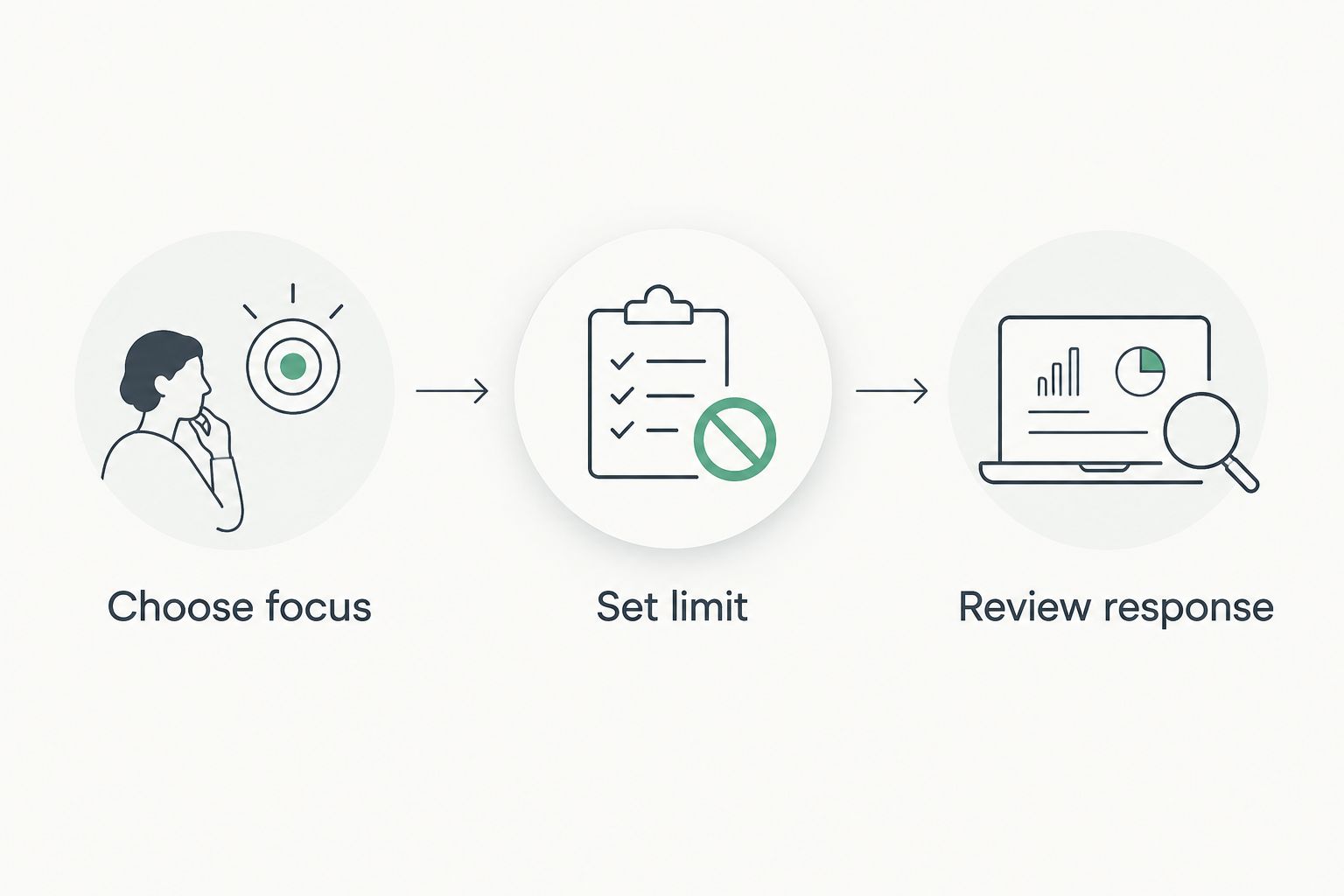
In 2026, choose a workbook routine by its usefulness rather than the length of a completion streak. Start with a manageable topic, not the most distressing experience you can remember.
Choose focus
Name what you need from the session: examine a prediction, identify a need, practice attention, or record an observation. Match that task to the workbook approach. Combining every exercise at once makes it harder to tell what helps.
Set limit
Decide where you will stop before you begin. A page boundary or a short session is enough for a first attempt. Leave unfinished prompts unfinished when continuing would mean pushing through distress.
Review response
After writing, ask whether the exercise clarified something or kept you circling the same concern. Keep useful exercises and pause unhelpful ones. Bring troubling reactions to a qualified professional rather than treating them as a failure of discipline.
Keep digital entries private using the controls available on your device and storage service. Consider who can access a shared device or folder before recording sensitive experiences.
How these approaches were ranked
The ranking prioritizes a clear task, understandable instructions, manageable effort, and practical limits. CBT-style workbooks lead for focused thought examination; the remaining approaches fill distinct needs rather than competing for the same reader.
The ranking does not establish product-level effectiveness. Author qualifications, exercise quality, and your response to the material remain essential checks.
Which anxiety workbook should you choose?
Choose a CBT-style workbook by default if your main goal is to examine worried predictions. Choose guided self-care instead when your immediate need is a gentle check-in, and choose tracking when you need organized observations for professional support.
Wanderingsweetsoul offers digital self-care workbooks and journals; use the same purpose-and-format checks when considering its materials. For a 2026 purchase, read the individual description rather than assuming a digital workbook includes a particular therapeutic method.
Explore digital self-care materials
Compare self-care workbooks, journals, and planners by the reflection task you want to support.
FAQ
What's the best self care workbook for anxiety?
A CBT-style workbook is the strongest starting choice in this guide for examining anxious predictions. Choose guided self-care for gentle reflection or tracking for organizing observations; the individual workbook's quality still matters.
Can an anxiety workbook replace therapy?
An anxiety workbook does not replace professional assessment or treatment. Use it as a reflection tool or alongside care, especially when anxiety interferes with daily functioning.
Is a self-care workbook better than an anxiety journal?
A workbook is better when you want instructions and structured exercises; a journal is better when you want open space to write. Neither format is automatically more effective simply because of its label.
Should I choose a digital or paper anxiety workbook?
Choose the format you can use privately and comfortably. For a digital workbook, check the file requirements and supported ways to enter responses rather than assuming compatibility.
What if workbook prompts make me feel more anxious?
Pause the exercise instead of forcing yourself to finish it. Discuss distressing reactions with a qualified mental health professional, particularly when prompts involve painful experiences.
Does Wanderingsweetsoul offer self-care workbooks?
Wanderingsweetsoul offers digital self-care workbooks, journals, and planners. Check each material's description to understand its purpose and format rather than assuming it provides anxiety treatment.
One last thing
An unfinished workbook is not a failed self-care routine. Keep an exercise because it helps you understand or respond to something—not because blank pages feel like a debt. Before starting another prompt, decide whether you need reflection, practical action, rest, or support from another person.